
The Recruiter’s Real Playbook: What Each Talent Platform Is Actually Used For
Mauro Junca Romero
•
27 Jan 2026
Not all hiring platforms are created equal.
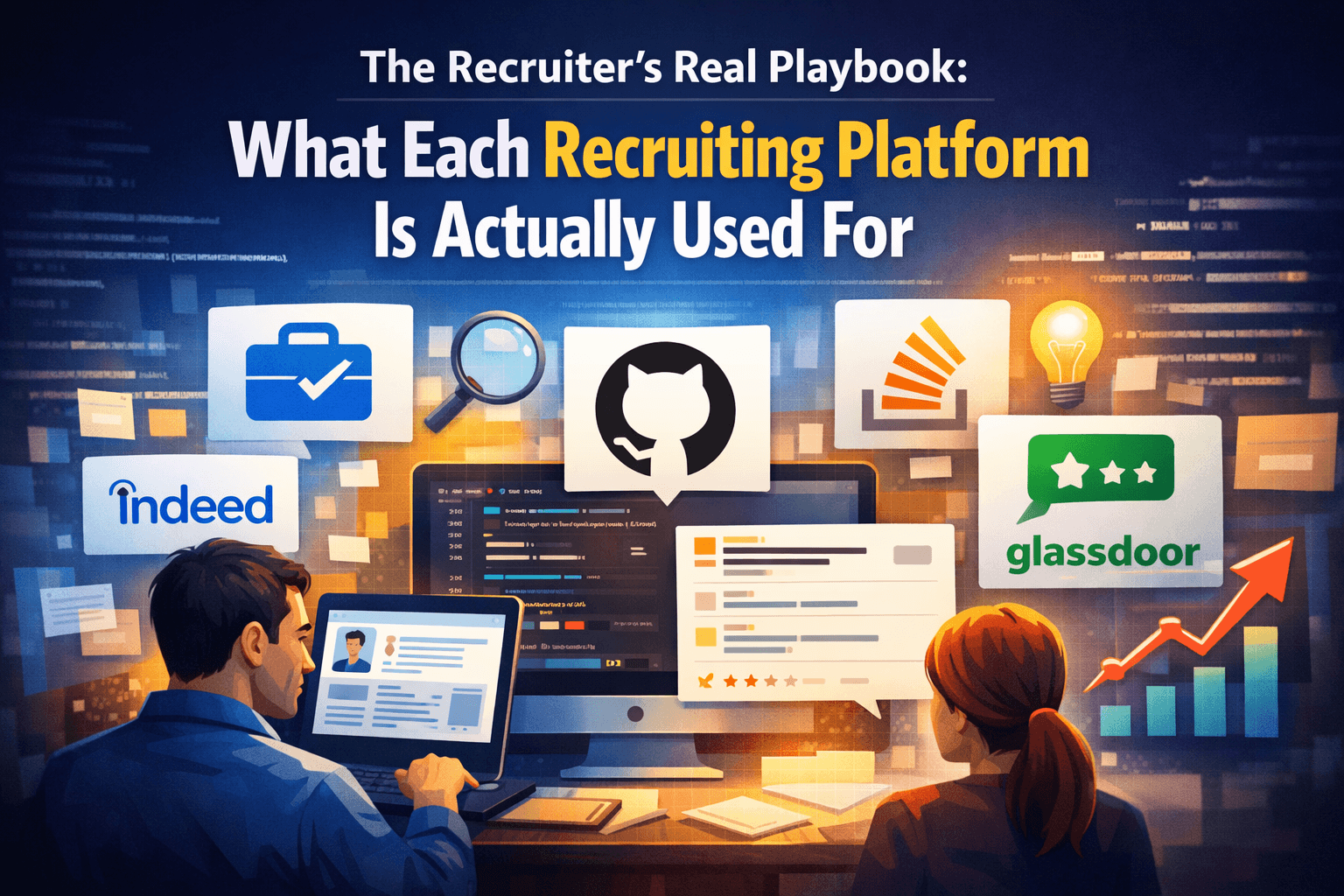
Recruiters don’t use Indeed, GitHub, Stack Overflow, Glassdoor, and Crunchbase the same way and understanding how they think about each one can completely change how you source, approach, or position talent.
Below is a recruiter-grade breakdown of what each platform is really good for, and the hidden signals recruiters look at when they’re there.
1. Indeed: The “High-Volume & Generalist” Platform
Most effective for
Entry- to mid-level roles (sales, customer success, admin, hospitality)
Candidates who are actively job hunting right now
Blue-collar and service sectors (logistics, retail, manufacturing), especially in Europe
How recruiters actually use it
Indeed is less about precision and more about scale. Recruiters rely heavily on the CV database to sift through thousands of profiles quickly, filtering by city, availability, and basic experience.
Think of Indeed as the fastest way to surface availability, not hidden gems.
Recruiter mindset
“If I need people now, and I need a lot of them, this is where I go.”
2. GitHub: The “Technical Credibility” Platform
Most effective for
Senior engineers, backend developers, software architects
AI, ML, and data science profiles (especially notebooks and repositories)
Passive candidates who aren’t job hunting but are building constantly
How recruiters actually use it
Resumes are almost irrelevant here. Recruiters look at:
Contribution graphs (the green squares)
Repository depth and originality
Followers from other developers
If respected engineers follow someone, that’s a strong peer-validation signal.
Recruiter mindset
“I’m not hiring skills. I’m hiring someone other developers respect.”
3. Stack Overflow: The “Niche Expert” Platform
Most effective for
Senior problem-solvers
Legacy systems specialists
DevRel and technical communicators
Highly specific tech stacks (Rust, Kubernetes, niche frameworks)
How recruiters actually use it
The Reputation Score is everything. In many European tech hubs, a high score is treated like a pre-passed technical interview.
Tags matter more than titles. A Rust expert is found via Rust tags, not job history.
Recruiter mindset
“If this person can explain and solve hard problems publicly, they can do it on my team.”
4. Glassdoor: The “Cultural & Strategy” Platform
Most effective for
Leadership and HR profiles
Culture transformation specialists
Employer branding and compensation benchmarking
How recruiters actually use it
Glassdoor isn’t just defensive. It’s offensive.
Recruiters:
Benchmark salaries city-by-city (Berlin, London, Paris)
Identify competitors with low work-life balance scores
Actively message employees at poorly rated companies
Recruiter mindset
“They’re unhappy where they are. Let’s show them something better.”
5. Crunchbase: The “Strategic Sourcing” Platform
Most effective for
Executives, founders, and C-suite roles
Startup builders who thrive in scale-up chaos
Fintech and deep-tech leadership
How recruiters actually use it
Timing is the weapon.
Recruiters watch for:
Funding rounds leading to hiring sprees
Layoff signals leading to sudden availability of top talent
Exit history showing founders and leaders who’ve been there before
Recruiter mindset
“Right person, right moment beats any keyword search.”
The Big Takeaway
Each platform answers a different hiring question:
Indeed: Who’s available at scale?
GitHub: Who builds real things and earns peer respect?
Stack Overflow: Who solves the hardest problems?
Glassdoor: Who might be unhappy and open to change?
Crunchbase: Who should I target right now based on market signals?
Great recruiters don’t choose one platform.
They orchestrate all of them.